創新創業顧問 / 明志科技大學 客座助理教授 / 國立臺北教育大學 專題指導
Innovation and Startup Consultant / Ming Chi University of Technology Visiting Assistant Professor / National Taipei University of Education Capstone Advisor
李鍇朮 Kai-Chu Li
YEARBOOK 2025

Article of famous designers

創新創業顧問 / 明志科技大學 客座助理教授 / 國立臺北教育大學 專題指導
Innovation and Startup Consultant / Ming Chi University of Technology Visiting Assistant Professor / National Taipei University of Education Capstone Advisor
I began my teaching career shortly after completing graduate school—right as I was moving on from my part-time student job and starting my career. At first I only accepted the teaching position at the behest of my former professors, with the intent of helping my alma mater, Ming Chi University of Technology. I viewed the position as an opportunity to learn how to teach and how to engage with the next generation. Thus, I began my life as a part-time teacher—working my day job, then teaching classes at night and during the weekends—an arrangement that continues to this day. Initially, I taught basic model making, presentation skills, computer aided design, and manufacturing. Then, I progressed to teaching classes on integrated product design. Eventually, I also took on the role of capstone project advisor, which launched the next stage of my teaching career.
After several years I’d established a solid teaching foundation for myself, which afforded me the flexibility to test a wide range of teaching and management methods. These methods were also applicable to my industry work; and this win–win scenario convinced me to continue teaching. Even now, I serve as an advisor for numerous companies and startups; I can lead colleagues in company departments to explore and plan their companies’ futures, which is largely due to my teaching experience.
To date, I’ve mentored eight capstone cohorts, and am on the verge of starting work with my ninth and tenth cohorts. During my earliest mentoring sessions with my initial cohort, I was still a newbie who didn’t know anything. I needed to work together with my students to research and plan every aspect of the capstone mentoring process, from the mentoring tempo and timetable to the prototype production quantity to finding competitions for the students to enter. Students also helped find industry–academia collaboration opportunities, subsidy opportunities, etc. Now, the eighth cohort is about to graduate. Throughout this process, I’ve continuously improved, adapted to the philosophies held by different generations of students, and adjusted my guidance methods and systems to keep up with the times, ultimately achieving today’s results. I’m very grateful to previous cohorts of students who accompanied me through the most difficult times. Looking back, my role as a capstone mentor originated because of students and my abilities improved because of students. My progress is completely due to my students, past, present, and future, and my desire to guide students so they can tackle the future challenges of the design profession and the workplace.
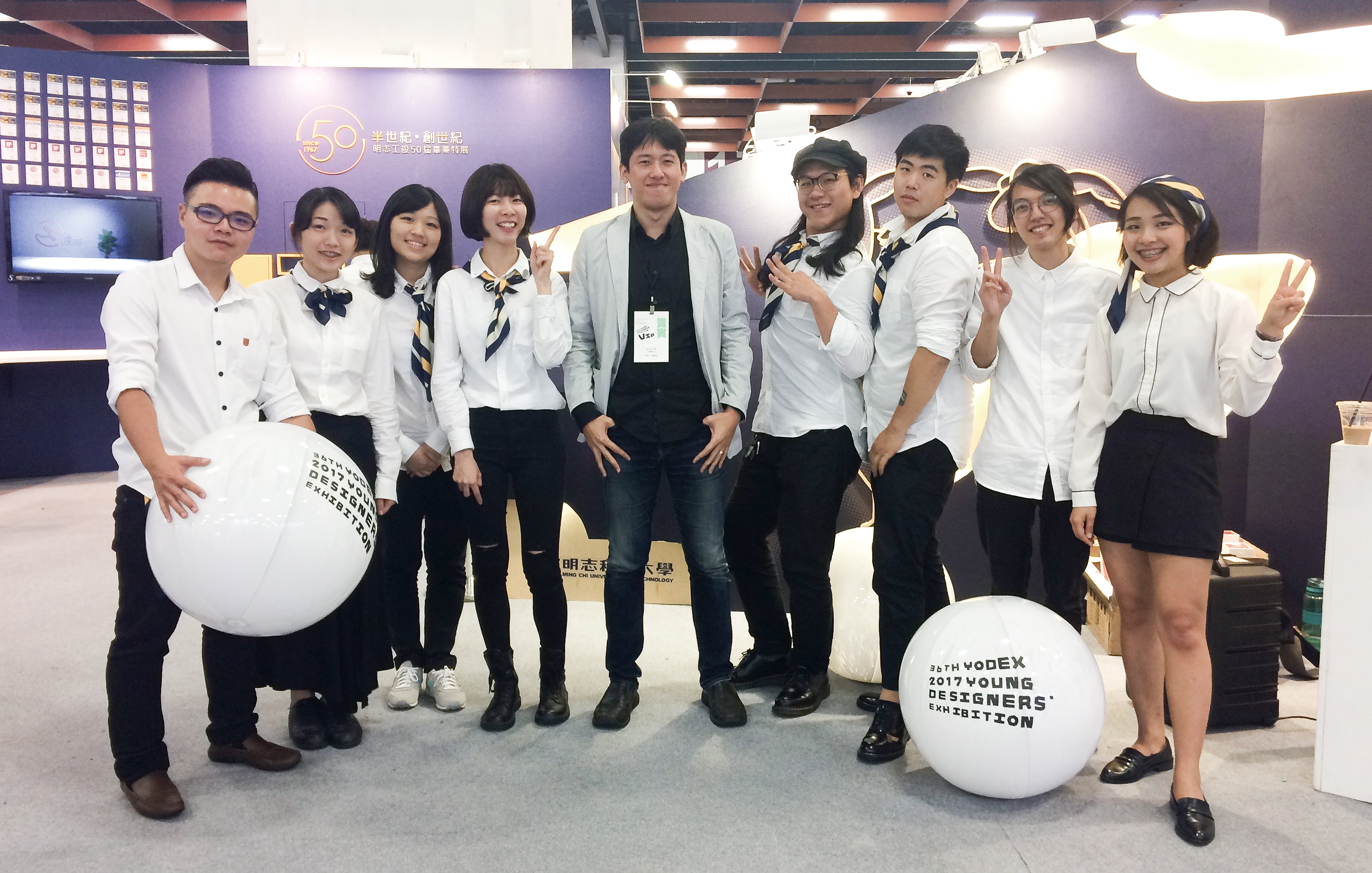
Image: Group photo of Professor Kai-Chu Li and students from the first capstone cohort; this cohort was selected for many Golden Pin Young Pin Design Awards and Red Dot Design Concept Awards (photo courtesy of Kai-Chu Li)
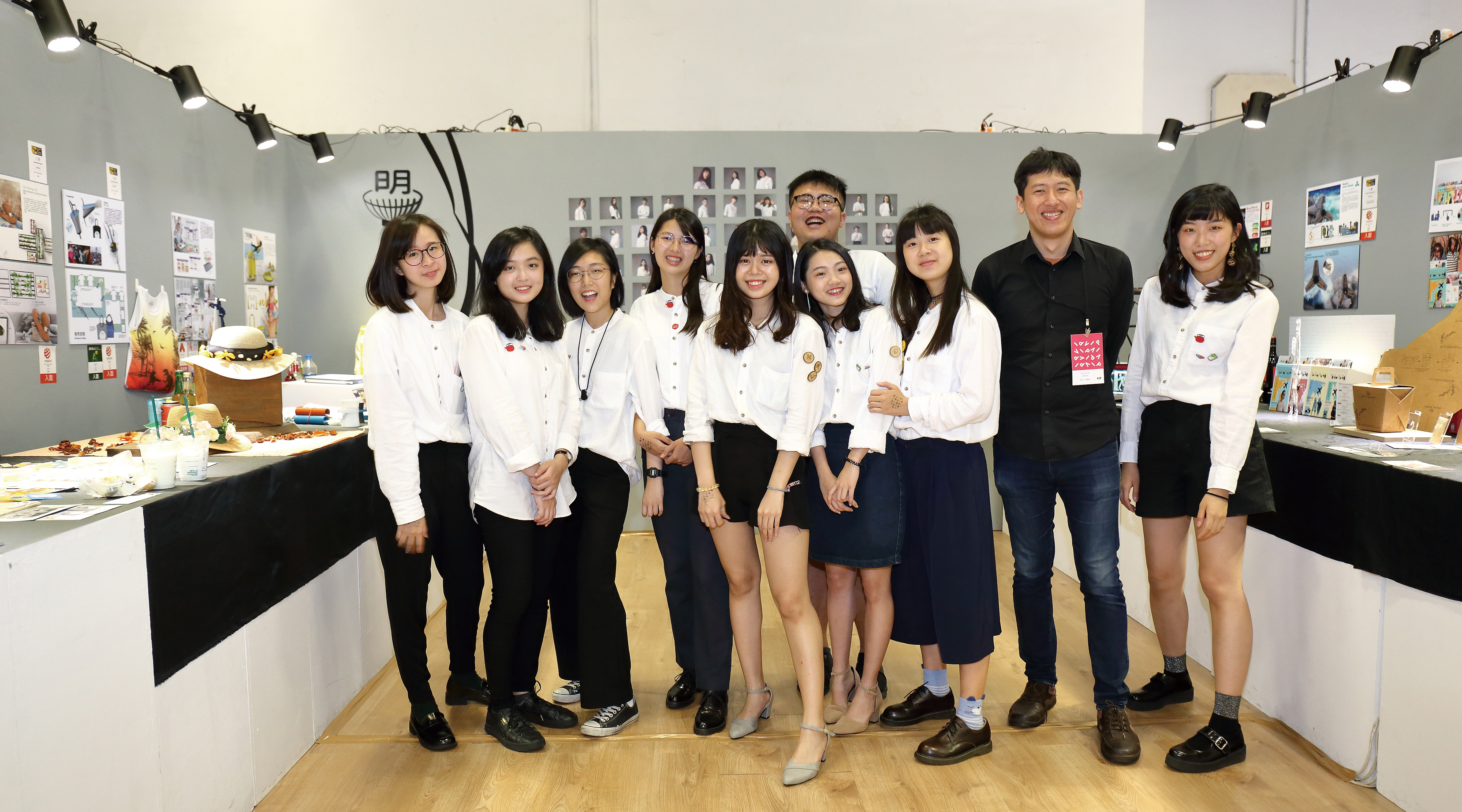
Image: Group photo of Professor Kai-Chu Li and students from the second capstone cohort; flanked by the students’ projects (photo courtesy of Kai-Chu Li)
During the capstone mentoring
process, I encourage students not to limit their creative topics, but to challenge
themselves and explore diverse fields of design, tackle interdisciplinary
development and cooperation, build up their basic design abilities, and participate
in industry–academia collaborations as well as various domestic and
international competitions, without restricting themselves to competitions in
any one design field. I also lead students to transform their innovative ideas into
startup ventures by studying market and business philosophies and needs.
I fully emphasize to my students
that during college they shouldn’t restrict their creative topics; instead they
should attempt to explore different aspects of design, experiment and play with
different design topics over time, and never shy away from the aspects they haven’t
studied it yet or aren’t good at it. The main reason I emphasize these points
is that Taiwanese students tend to mature very late in terms of their
professional abilities and understanding of the workplace. In the future, they
will need to walk unfamiliar roads, and they are often overly self-confident.
In the past, I watched too many students and underclassmen arrive in the
workplace, only to ultimately discover that they didn’t like or were not suited
to create designs in a certain field—but they had no alternatives, because up
to that point, they had never explored other fields of design, leaving them
trapped in their current workplace. Therefore, when advising the capstone
class, I emphasize that they should not limit their design topics and should strive
to explore multiple design fields.
I believe that in the future, designers’ main role will be serving as a driving force for innovation and bringing out humans’ greatest strengths. Diverse development and diverse creativity will contribute to broadening and creating intersections among designers’ perspectives and thinking, which will then stimulate even more innovative possibilities.
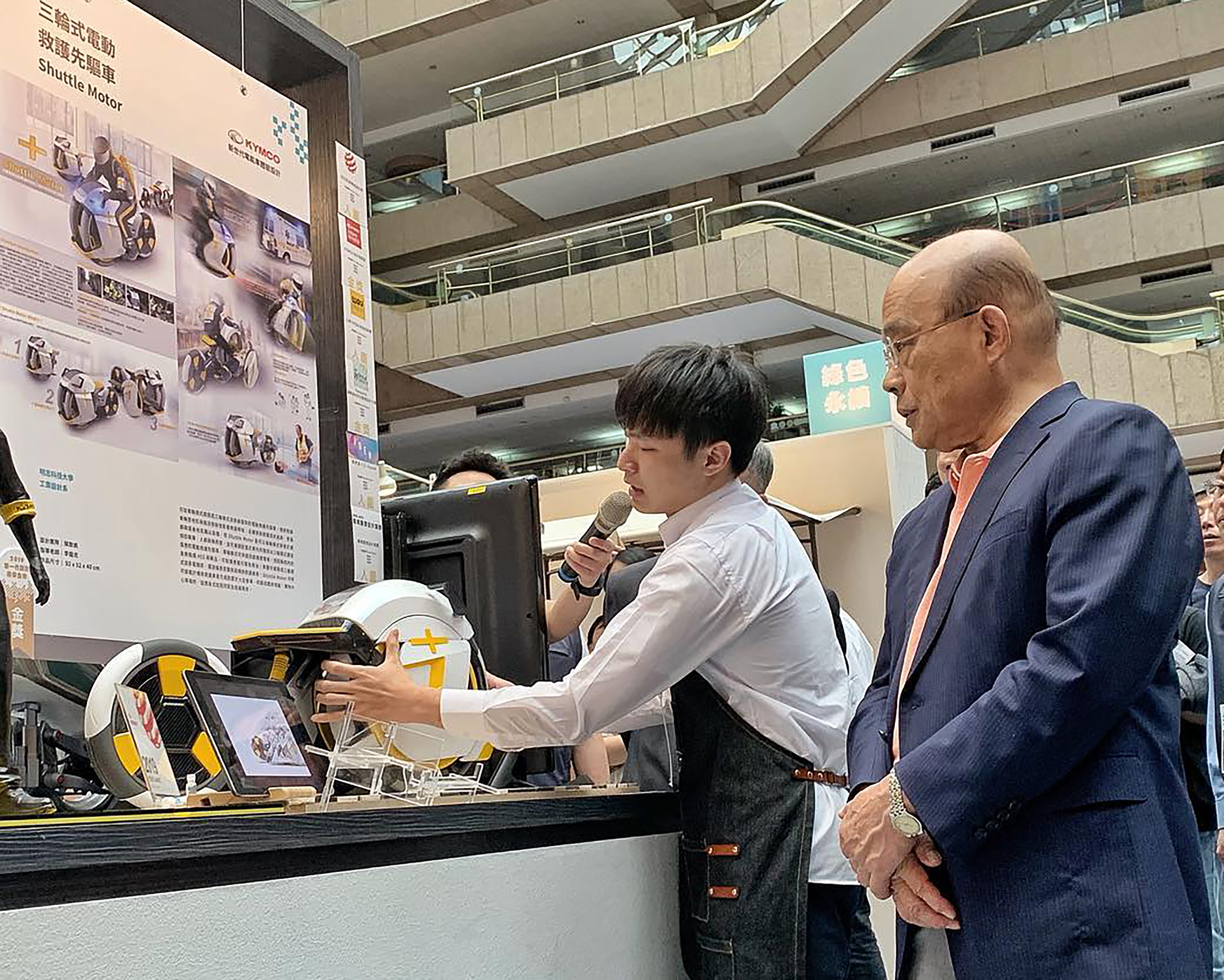
Image: The third cohort mentored by Professor Kai-Chu Li; students introduce the ambulance motorcycle they designed to officials (photo courtesy of Kai-Chu Li)
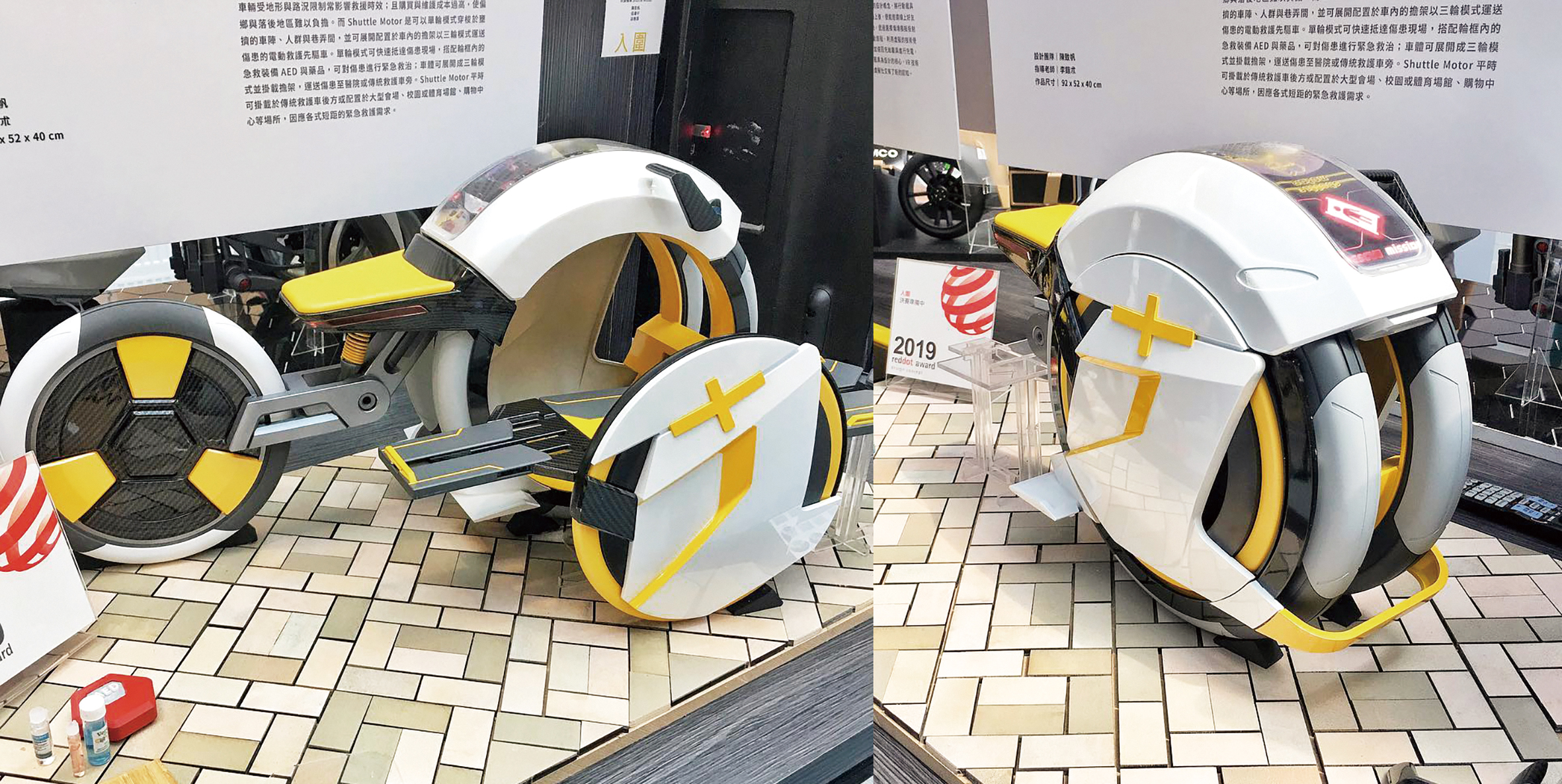
Image: The third capstone cohort mentored by Professor Kai-Chu Li won the Gold Medal in the 8th KYMCO Design Challenge Cup for their shuttle Moto design (photo courtesy of Li, Kai-Chu Li)
Over the past few years of
teaching, I’ve observed that students’ fundamental skills in both industrial
and product design are gradually atrophying or being lost, possibly because of
changes in the field of teaching. We no longer teach students how to navigate
their future, manage their free time, and choose appropriate classes for
themselves. We just hope that students will tale advantage of reduced
courseloads to choose interdepartmental or interuniversity classes that will
help them in their future. Perhaps there are other causes as well, but the fact
is that I am seeing a widening gap between study and application among current
students.
Regardless of the reason,
leveraging my past industry experience and current experience as a corporate
consultant, I’ve reconsidered which professional talents are needed in the
industry and future workplaces, and I’ve used this as a basis to restructure my
lesson plans for teaching basic industrial and product design skills. I’ve also
gradually and comprehensively integrated these competencies into the capstone
mentoring process, using topic-based practice and practical professional challenges
to force students to relearn these skills. Right now, encouraging students to explore
diverse design fields gives them an even bigger advantage and can maximize
learning opportunities. However, this also extends the capstone mentorship
duration, which is why we must now start the capstone program immediately after
the end of students’ second year as undergraduates.
In terms of fostering basic
abilities, I question whether industrial and product design should be
classified as artistic disciplines. During capstone project mentoring, I classify
“aesthetics” as an unimportant aspect for guidance. At the very least,
generative AI can already accomplish some degree of “aesthetics”, and I can
also foresee that in the future, generative AI will develop to a terrifying
degree.
That’s not to say that “aesthetics”
aren’t important, but that there are many other abilities that must be
developed evenly, and no single ability can be individually prioritized. Industrial
and product design must consider and discuss a wide range of factors, including
users, marketplace, and industry, and it must integrate every professional
skill and practical ability, including electromechanics, structure, human
factors, materials, engineering integration, programming, safety regulations,
and legal compliance. Once this is done, we can add aesthetics into the mix to
create a product that combines functionality, convenience, appeal, and
desirability. If this process isn’t self-satisfying or fun, so be it—I often tell
my students that industrial and product design is not art, it is development;
we can integrate artistic elements, but we are not artists.
If I wouldn’t want to hire these novice designers at my own company, could I still consider this successful teaching? This is a question that I constantly think about while teaching. During teaching, I also strive to avoid forcing students to design according to a model or a template. I often think, is design education really about duplication? Do I want my students to copy? So, during the teaching process, I frequently mention to the students that what I teach them isn’t the end all be all; it isn’t a standard or a framework. Students can add their own content to subvert the framework, just so long as the user, the client, and the manufacturer approve and their design decisions make sense to me. Although, these days, I frequently come across designs that are difficult for me to make sense of. XD