輔仁大學應用美術系教授
Professor, College of Art, Fu Jen Catholic University
陳國珍 Kuo-Jen Chen
YEARBOOK 2025

Article of famous designers

輔仁大學應用美術系教授
Professor, College of Art, Fu Jen Catholic University
As the world becomes increasingly concerned about environmental issues,
sustainable craft is gradually becoming an important trend in industrial
development. This is not merely a transformation in the choice of materials,
more importantly, it represents a completely new design philosophy and
production model aimed at mitigating environmental impacts, promoting a sense
of social responsibility, and strengthening consumers’ environmental
consciousness.
I. Definition of Sustainable Craft
The term “sustainable craft” indicates that environmental protection and social responsibility considerations are thoroughly integrated throughout all aspects of a work, from design to manufacturing, distribution, and consumption. Core principles include using renewable materials, reducing waste, reducing carbon footprint, and ensuring workers’ basic rights.
This form of artisanry, while valuing aesthetics and functionality, also considers
the work’s overall impact on the Earth and society. Sustainable craft is an
industrial transformation that combines concepts with practice, aiming to
promote more environmentally friendly and socially responsible methods of
production and consumption, and ultimately reduce resource waste, improve
working conditions, and reduce the overall burden on the environment.
II. Integrating Sustainable Craft into Regional Revitalization
In recent years, the creative economy has risen to prominence alongside the concepts of sustainability and circular design. For example, on Chifeng Street in Taipei City, the value of craftsmanship has been combined with art creation to produce new vitality. Starting in 2021, the Asian Art and Cultural Creation Industry Development Association began to promote events related to Chifeng Street’s art district. Then, in 2022, it launched the Trash to Treasure circular art creation project and collaborated with local businesses to hold mixed media art exhibitions. In 2023 and 2024, this idea was further developed and extended, centering on Chifeng’s identity as a “blacksmith street”. Chifeng’s car repair industry was combined with metal crafting to conduct the Metal Craft Seasonal Metalworking Creation Contest, with the aim of advocating the development of local culture and artisan crafts. The transformation and sustainable development of Chifeng Street represents a perfect combination of history and modernity, making this neighborhood shine with renewed vitality.
III. The Need to Promote Sustainable Craft
1. Environmental Impact: The traditional manufacturing industry is the world’s second largest polluter. It poses grave dangers to water resources, air quality, and biodiversity. Every year, countless products are discarded, giving rise to colossal amounts of waste and resource wastage. The promotion of sustainable craft aims to reduce negative impacts on the environment through the use of sustainable materials and technology.
2. Social Responsibility: Issues of labor exploitation and unfair treatment are rampant in many supply chains. Sustainable craft emphasizes fair trade and worker rights, ensuring that every worker can enjoy reasonable compensation and safe working conditions.
3. Consumer Awareness: With the
popularization of environmental protection and social responsibility issues, a
growing number of consumers are choosing to support sustainable brands. This has
also forced businesses to rethink their business models and transition toward
more responsible and far-sighted economic strategies.
IV. Practical Strategies for Sustainable craft

OYSTER ACTION
Materials: oyster shells, oyster ash, cement, metal, plant-based essential oils
2. Production Process Optimization: Through lean manufacturing and zero waste concepts, companies strive to reduce their consumption of energy and water resources while promoting material recycling and reuse. Some brands take leftover materials from manufacturing and reprocess them into new products to reduce waste. For example, the project Bloom transformed recycled waste gachapon capsules into new forms, producing colorful plastics through experimentation. The shape of these lamps is inspired by the fluttering form of a reborn and metamorphized butterfly, symbolizing blossoming and eternal life. (Creators: Chen-Hsuan Wu, Tuan-Yi Yan, Yu-Shan Fu)
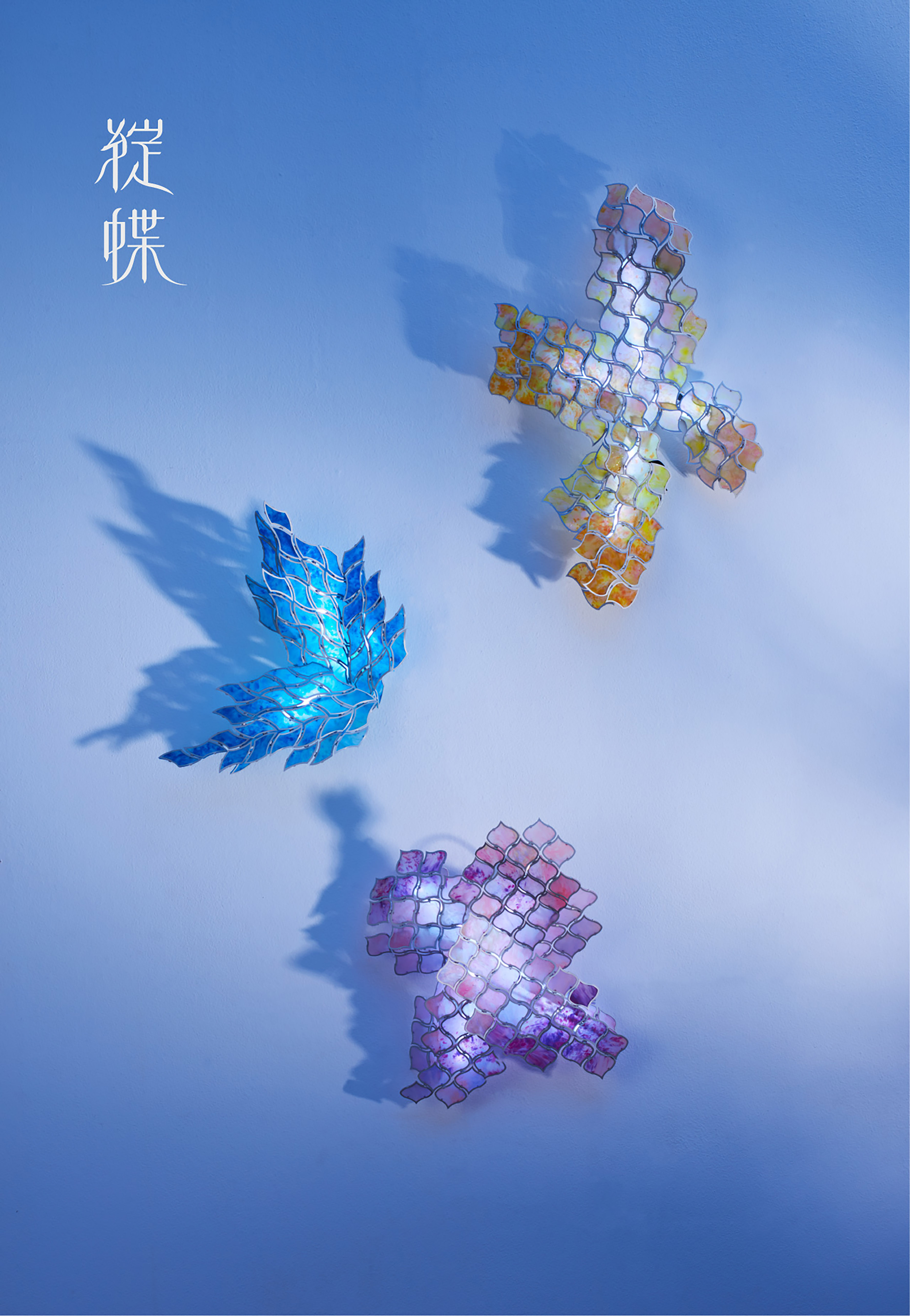
Bloom
Materials: gachapon capsules, aluminum, copper, LED lights, frosted acrylic tube
3. Revolutionary Design Concepts: Sustainable design emphasizes classic and timeless styles, aiming to avoid excessive consumption as a consequence of rapidly changing trends. This action not only extends product lifespans but also reduces overall resource consumption. These works emphasize the balanced development of technology and traditional crafts by integrating the external appearance of traditional crafts and the the internal value of high-tech smart technology into modern life. This approach touches people’s hearts while also prompting them to consider their values. For example, the work Zemadrezadrezadr—Love Like Light incorporates glass beads, which represent the crystalized emotions of the Paiwan people, as design elements to create a wedding headdress inspired by the love story of the peacock prince. By utilizing traditional colored glassmaking techniques and integrating metalwork into the design, the work reinterprets the peacock prince legend and recreates the beauty of traditional Paiwan crafts. (Creators: Chieh-Ni Chung, Ya-Fen Hung)

Zemadrezadrezadr—Love Like Light
Materials: colored glass beads, glass, feathers, copper electroplated with silver
4. Supply Chain Transparency: Many sustainable crafts strive to establish publicly transparent supply chains that allow consumers to clearly understand the products’ origins and production process, thereby establishing further trust. Such crafts also encourage businesses to practice higher ethical standards, call on them to care for precious flora and fauna, and urge them to stop ecological destruction. For example, the work 432 Hertz discusses how merchants kill animals through inhumane methods purely to earn a profit from their pelts. This exploitative industry pushes precious animals to the verge of extinction. Therefore, we used foxes and snakes as our inspiration to design lifelike bags and jewelry to call on consumers to reject buying inhumane furs, and take a stand against animal cruelty. (Creators: Chia-ho Wang, Tzu-Hua Chen)
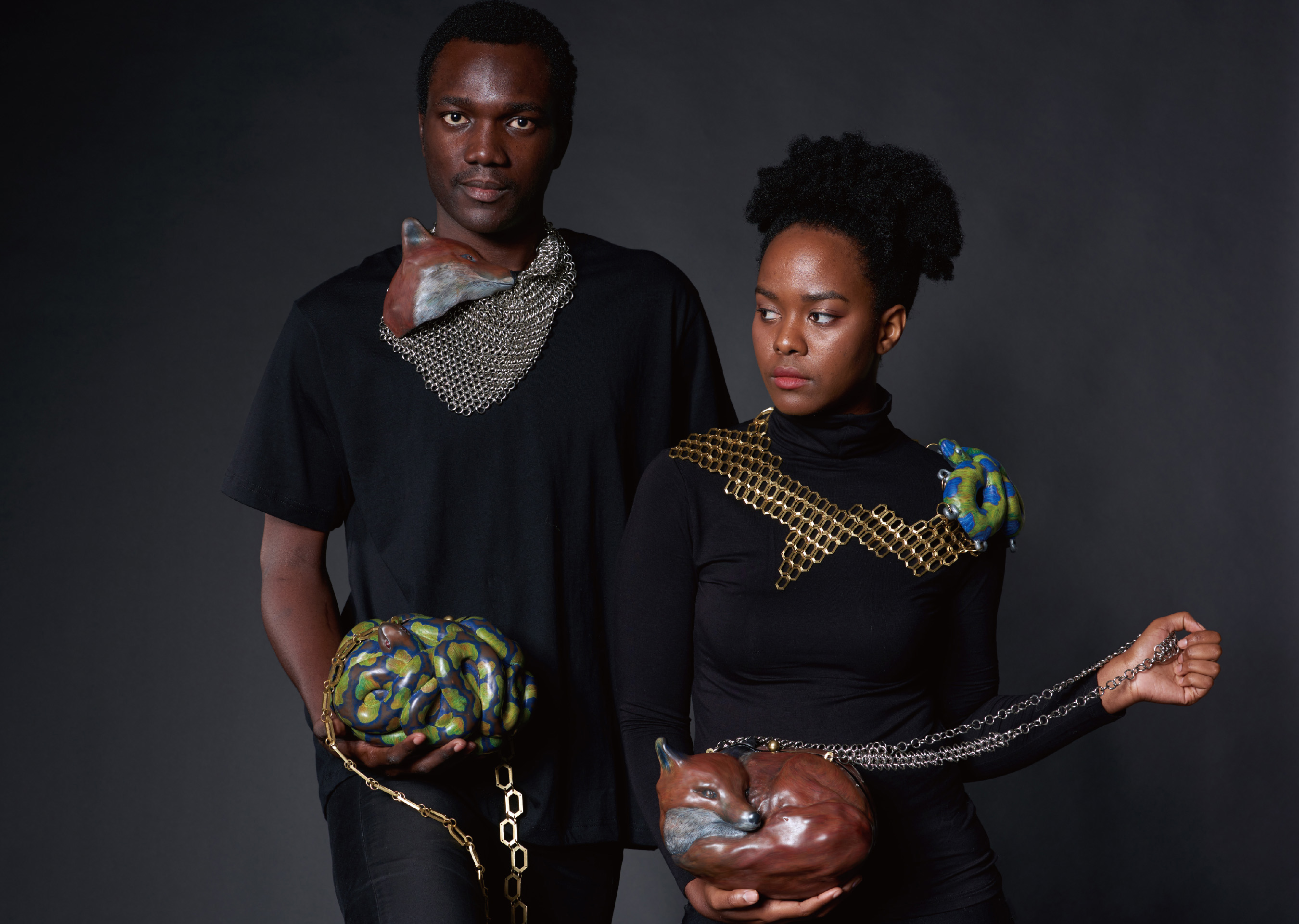
432Hz
Materials: copper, brass, iron, colored pencil
V. Challenges Faced by Sustainable Craft
Although sustainable craft has received widespread global attention, in
practice it still faces many challenges. First, the costs for sustainable
materials and technologies are usually higher than traditional options, putting
some brands at a disadvantage in terms of price competition. Additionally, the
public’s consumption habits still need to change, as most consumers still
prefer fast and low-priced consumption models. Moreover, sustainability
standards and certification systems are not comprehensive, so consumers lack clear
guidance when selecting products.
VI. Future Outlook
As technology advances and consumer consciousness is raised, sustainable craft development has a promising future. More and more brands are investing in innovative materials and production processes while also actively participating in social responsibility activities. Government and non-governmental organizations also continue to promote policies and initiatives that pave the way for the development of sustainable craft.
In short, sustainable craft is not only a starting point for an industry revolution, but also a deep reflection on lifestyles. Only when every consumer, designer, and business jointly bear responsibility for the environment and society can we truly achieve harmonious coexistence of craft and the environment. Future crafts will not only showcase material beauty but will also embody designers’ accumulated profound concern for the Earth and humanity.