國立臺灣工藝研究發展中心 主任
National Taiwan Craft Research and Development Institute Director
陳殿禮 Chen Tien-Li
YEARBOOK 2024

Article of famous designers
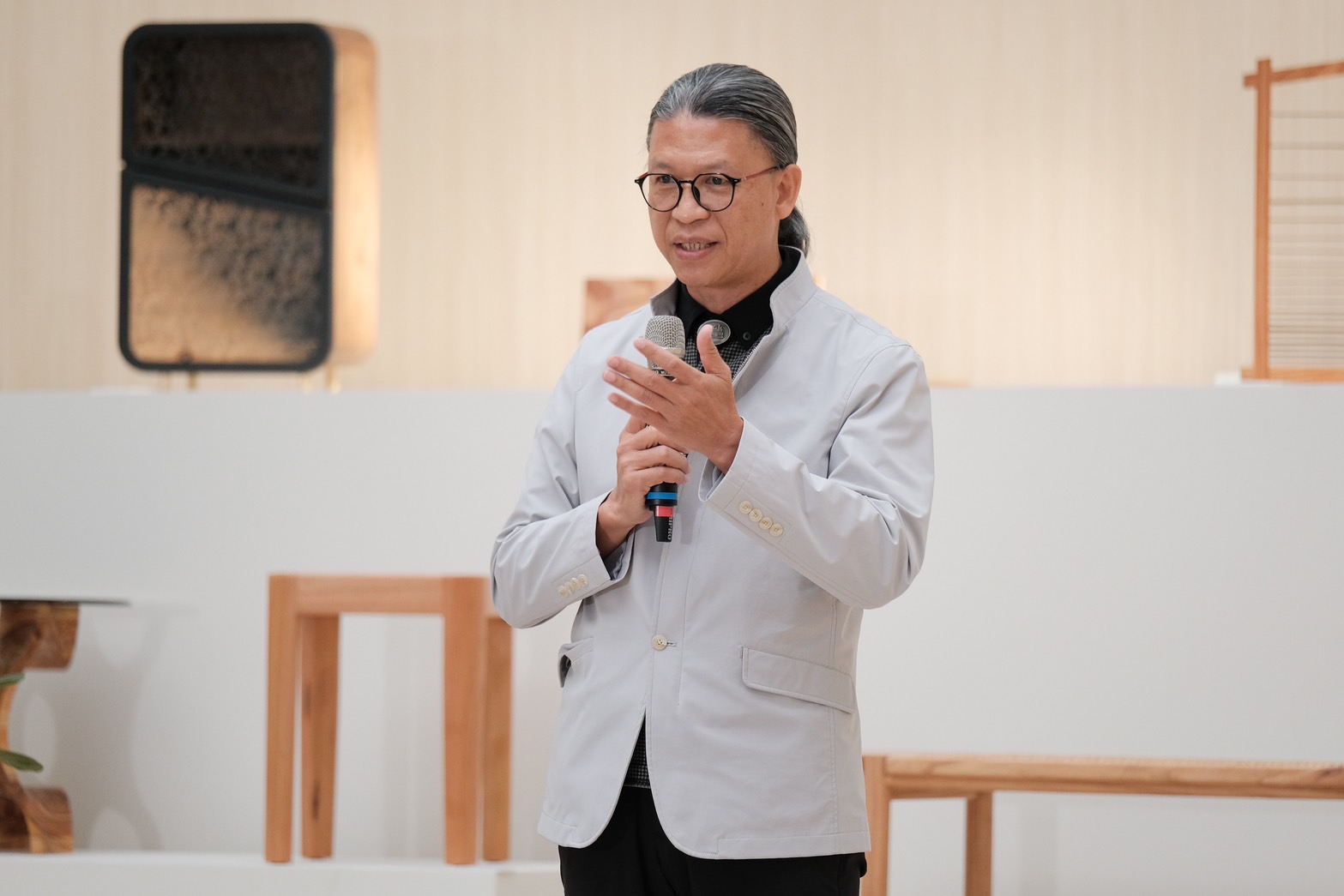
國立臺灣工藝研究發展中心 主任
National Taiwan Craft Research and Development Institute Director
1. Craft innovation centered on People
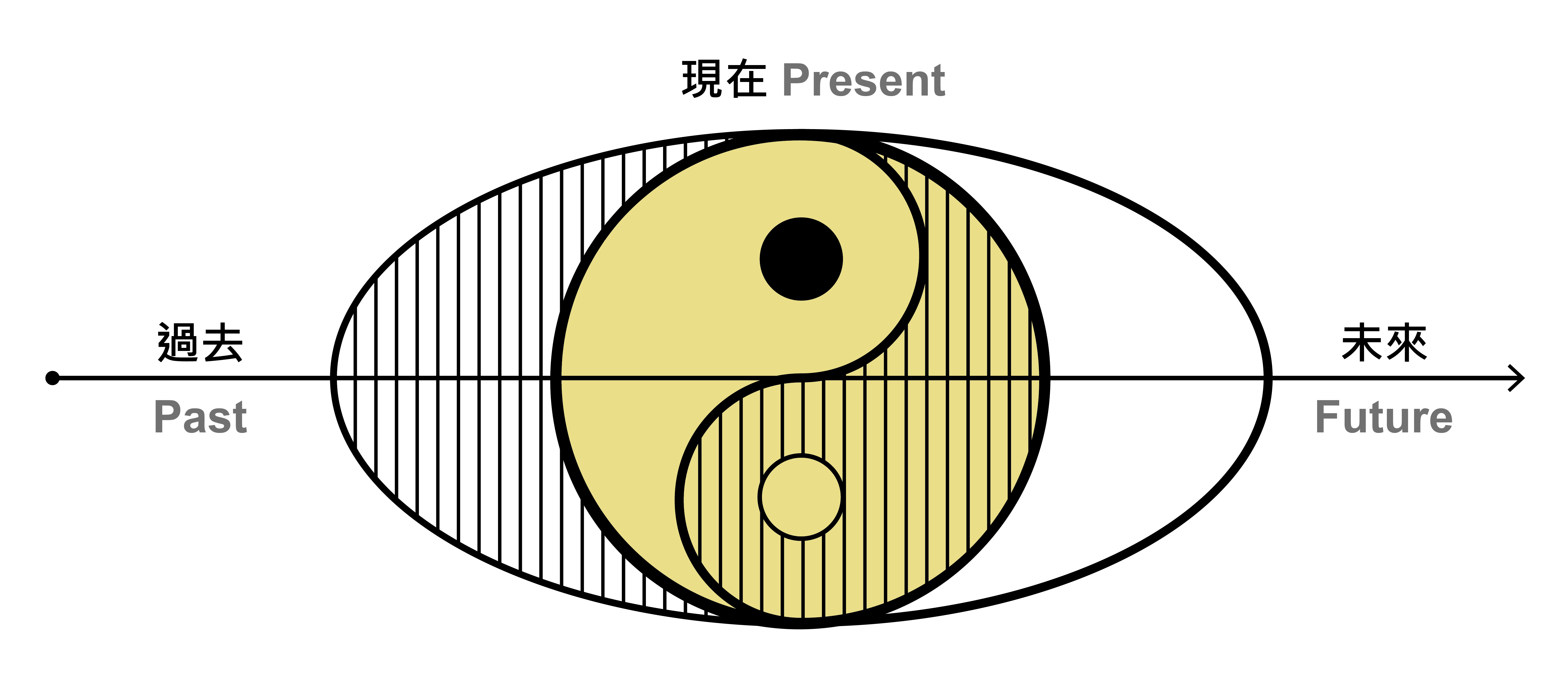
The crafts began with people’s daily needs, so they have been upgraded and developed to keep up with times. Past innovations have been accumulated into the present tradition; our innovations now will become the future’s traditions. Therefore, “the present” is an important time point where tradition and innovation meet. In other words, the Tao (the Way) of craft design innovation means being able to grasp the present, and create functional objects that suit modern users’ lifestyles. Craft is intimately entwined with people’s lives. In the past, the functional objects used in people’s daily lives were all hand-made crafts, so handicrafts are to human living as air is to human life. But people get used to these crafts, and even ignore them – just like air, they look at it but don’t see it. However, the quality of air determines the taste of life. As a craft innovator, especially in our current era filled with industrial products, we should think about how to help users use craftwork in their daily lives to create their own uniqueness and manifest the taste of life. Through the structure of relationships between craft and people’s lives, we can create uniquely “functional” beauty to enhance well-being for modern people. This is a topic worthy of consideration for handcraft innovators.
2. Technical Significance Innovation in handcrafts
Skills are the foundation of craft, and also the cornerstone for artisans to make a living. Such skills include a mastery of materials, tools, methods, processes, etc. required for the craft. As the times move on, and especially with the emergence of digital technology and artificial intelligence, we need to master and upgrade our skills in craft creation; we need to keep up with the times by appropriately applying our skills to future-oriented innovation that aligns with modern users’ needs.
3. The Tao of Innovation: “3 Stages and 5 Determinations”
To respond to the rapid advancement of craft technologies, I would like to share my “3 Stages and 5 Determinations” for the craft innovation process. In the first stage, the direction for innovation needs to be controlled through clear “determining the meaning”. In the second stage, you have to “determine the direction and determine the nature”, so that you can find a positioning for “determining the position”; only then can you invest resources and give it your all to achieve the goal. In the final stage, your results need to be able to “determine a price-point”, to find the value and market price of craft innovation. These are my three stage and the five determinations for innovation.
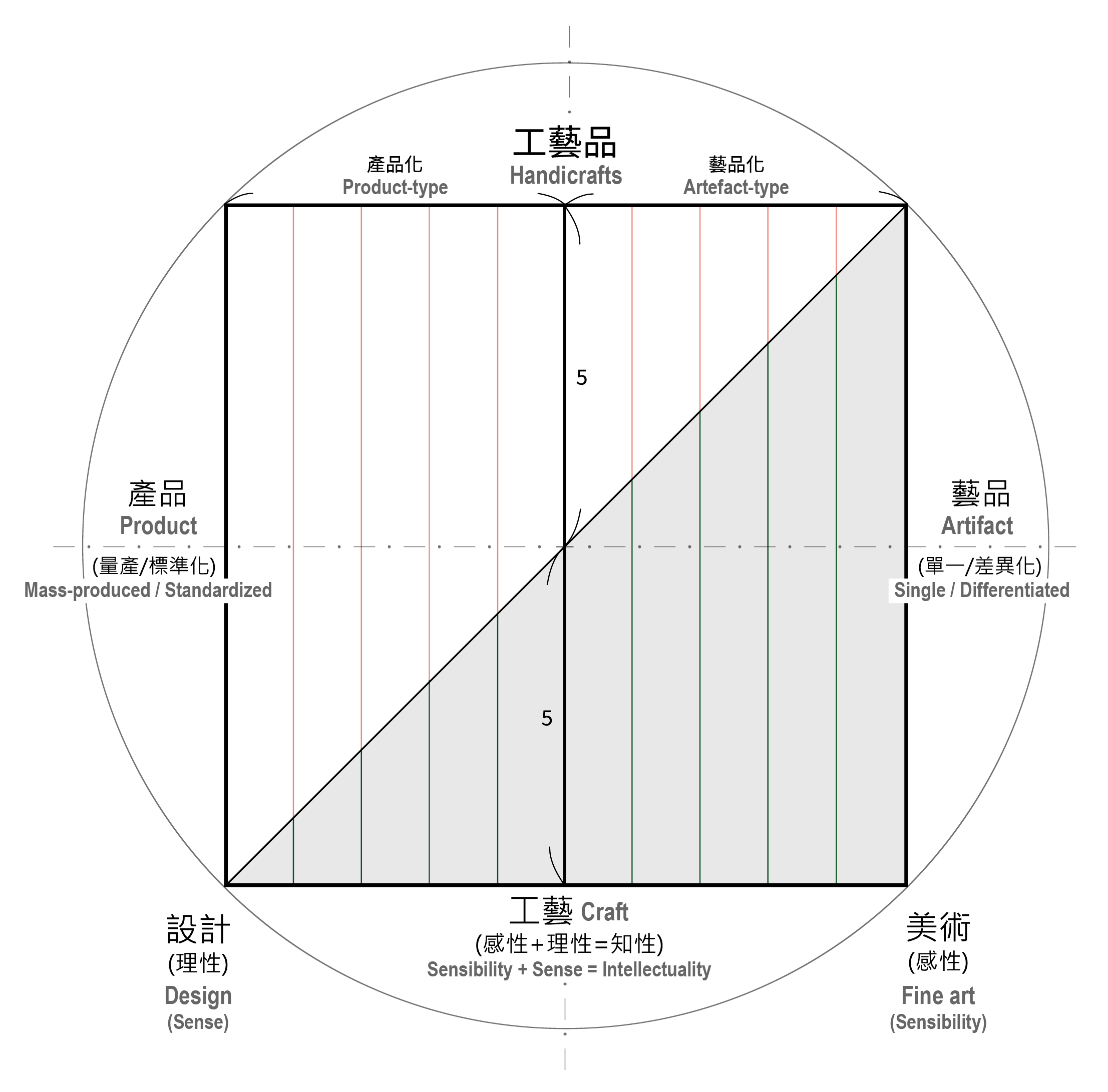
That’s why the clear definitions needed for craft innovation can be determined by exploring relationships between fine art, craft, and design (Fig. 2):
1. Production method: If the quantity of produced items is just one or a small quantity, then those items shall be categorized as artefacts (personalized). If the quantity can be gradually increased with the aid of process techniques, the items may be mass-produced (standardized). Handcrafts fall somewhere between these two categories; they may be just one piece, or they may be mass-produced.
2. Way of thinking: Fine art tends to emphasize sensibility, while design focuses more on sense. Handicrafts are created based on intellectuality, and possess both characteristics of sensibility and sense. Artefacts pursue personalization, uniqueness, and deep-level thinking; products, on the other hand, highlight standardization and pay more attention to management and cost control.
3. Object characteristics: Handicrafts possess varying mixed characteristics of both artefacts and products. When they fall on the left side of the diagram, between products and handicrafts, they are “product-type craftwork”, in other words, suggesting that such objects are more like products. Those that fall on the right side of the diagram, between craftwork and artefacts, are then “artefact-type craftwork”, indicating that they possess more characteristics of artefacts.
4. Examples of craft design innovation
I would like to share some design examples in this section. By echoing the theme of 2023 Taiwan Craft Award – “Natural, Recyclable, and Sustainable” – the Nudibranch series created by Liao Hsiu-Ling was honored with a Grade 3 Medal (Fig. 3). The artisan incorporated digital media and artificial intelligence into this work, while upholding traditional handicraft techniques – the very soul of sustainability. She skillfully utilize different materials in presenting these delicate, lifelike works. By utilizing Fluorescent Colors from contemporary media and neon lights, a futuristic sense of alien space is highlighted. The hollow bodies of the alien-looking creatures are eye-catching, attracting viewers to peer inside. With the aid of digital media and artificial intelligence, craft works can be presented in more diverse and unimaginable ways.
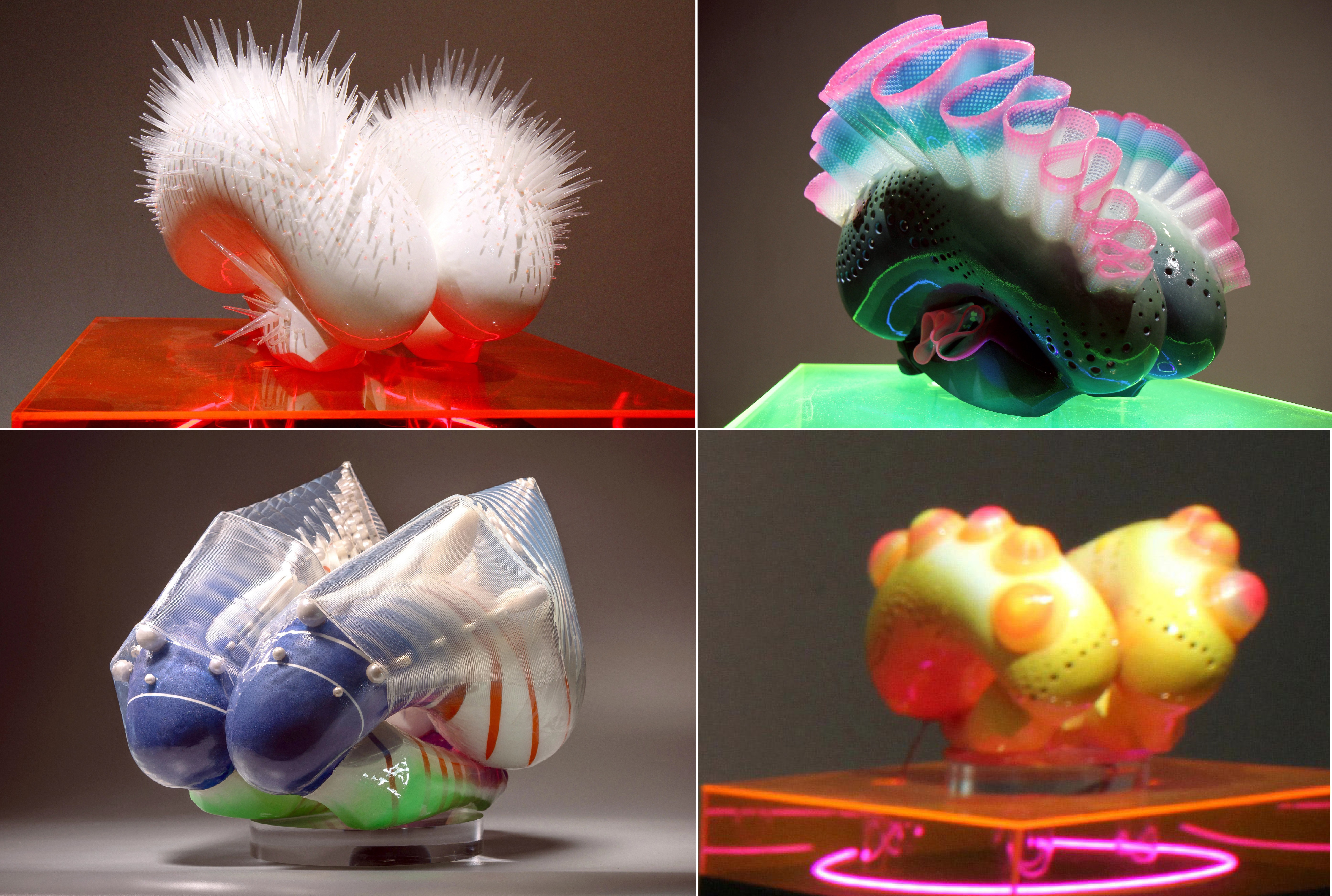
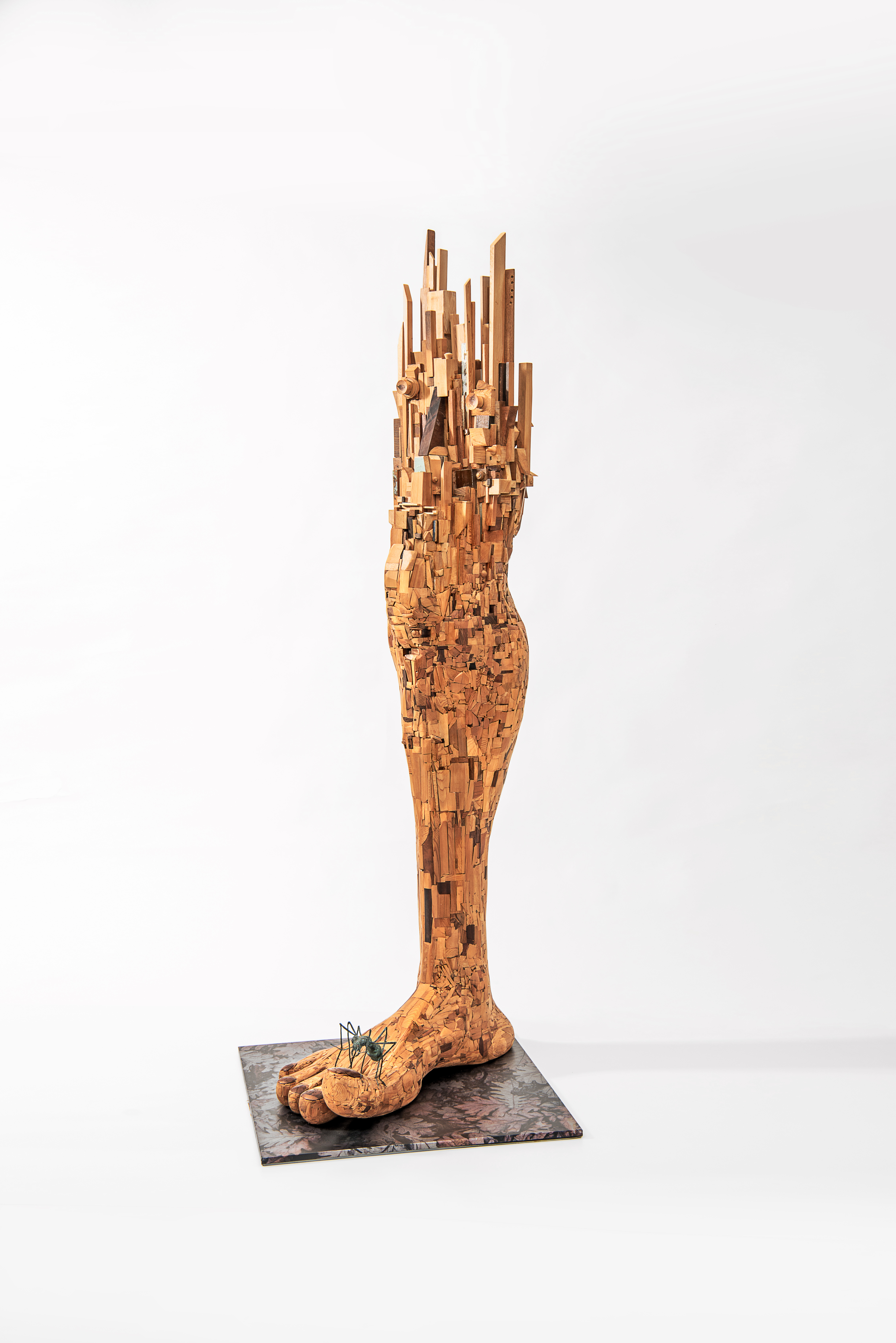
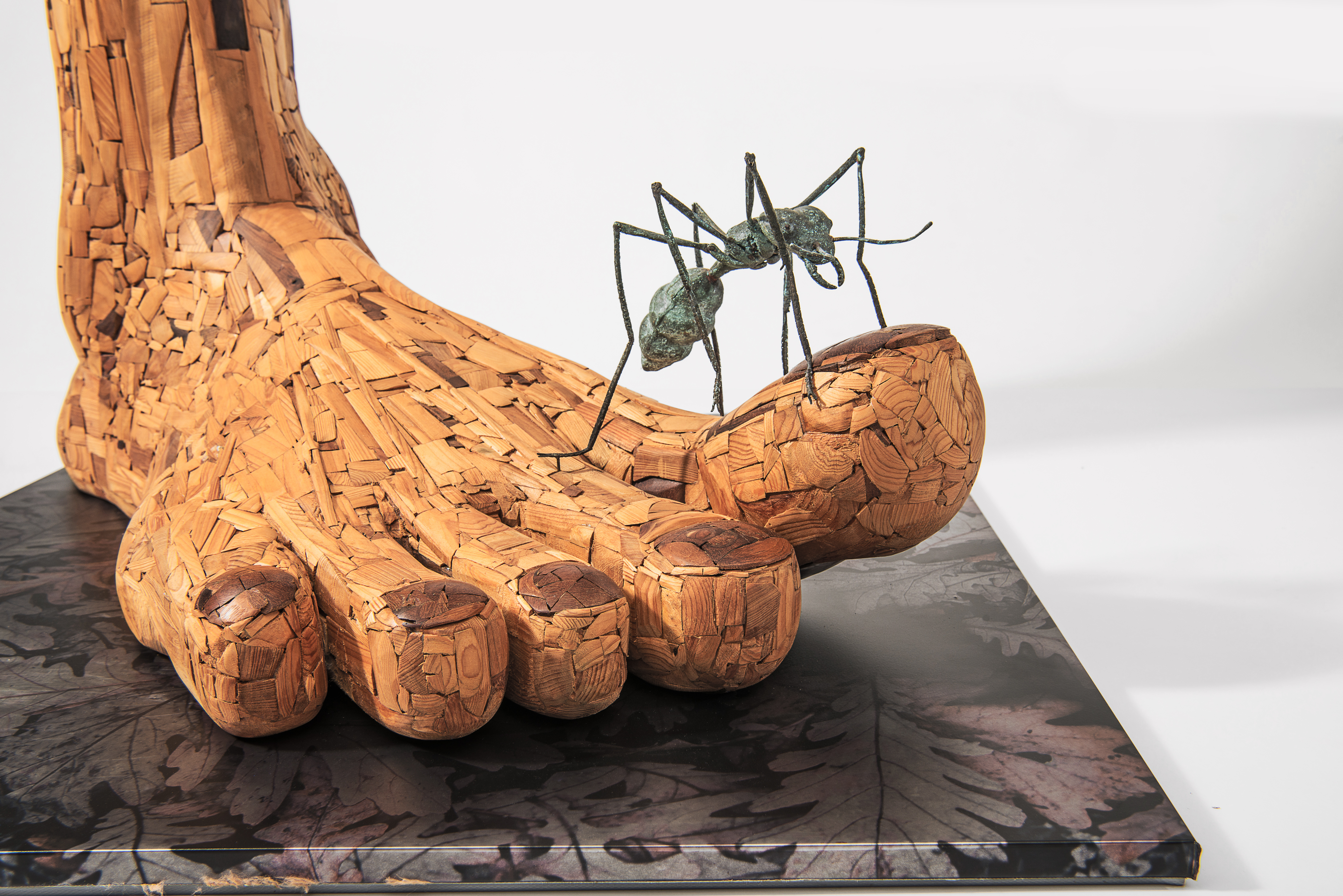
Fig. 4: 2023 Taiwan Craft Award - Honorable Mention Award winner Guardian Spirit of the Mountains-Shanxiao (One-legged Mountain Spirit).